




Pilates Workouts: Building Strength, Grace, and Balance
14views
Pilates has gained popularity for all the right reasons. It is a mindful exercise involving controlled movements, which helps people build strength in the body as much as in posture or flexibility. More than a hundred-year-old workout introduced by Joseph Pilates, it focuses on core stability, breathing, and precision. For those who have just begun working out or are planning something to add to their regimen, getting healthy can be made easy with Pilates since it is a low-impact exercise. Read further to have an insider look into what actually constitutes Mat Pilates and Reformer Pilates and some other targeted areas like Pelvic Floor Focus as well as Mobility Training that define how adaptable Pilates becomes for every fitness enthusiast on any level.
The Base of Pilates Exercises
At its heart, Pilates is quality rather than quantity. Every motion involves the mind and body with awareness and control. Whereas high-intensity workouts develop endurance suddenly, in Pilates, such strength builds gradually and does not lead to injuries. Anybody can try it – from beginners who just got off the desk to athletes tweaking their forms.
Mat Pilates: The Accessible Entry Point
Mat Pilates is the classical version done on a simple mat with exercises using body weight as resistance. There is no great requirement for space and fancy equipment, hence it can be practiced at home. Classes run between 30 to 60 minutes going through a series of fluid exercises.
Mat work refers to exercises performed lying, sitting, or standing that direct work to deep abdominal, back and hip muscles. This allows for total core strength with coordination enhancement. Mat Pilates presents a mild workout which permits novices to focus on breath and acquire proper alignment as it does not impose too much strain.
Mat Pilates is advantageous because it focuses on the basic movements. Postures such as the basic pump or spine curl help to develop strength and also give a lesson in proper spinal movement. One finds that they can easily pick up bags of groceries or maintain good posture throughout the day after some time of regular practice in Mat Pilates.
Reformer Pilates: Uses a Special Machine Called the Reformer
Reformer Pilates uses a special machine called the Reformer. It is just a frame with a moving bed, springs for resistance that can be changed, and straps that can be held onto in many ways. So, moves helped by mat work are possible and even more smooth and supported.
In Reformer Pilates, Springs allow for seamless resistance so that muscles can engage more readily while at the same time keeping strain off of the joints. It is excellent for discovery or those who wish to add intensity in a very safe manner. A typical class may involve footwork on the carriage or leg circles with straps always maintaining that typical Pilates control.
Reformer Pilates works great with total body engagement since the machine can support at different angles. Beginners prefer using it because of the guidance that it offers, while advanced users can increase spring tension to make resistance even greater. This style makes balance and strength better with time and makes simple movements put into daily activities seem like second nature.
Pilates offers results of the mind and the body. Practice this exercise two to three times every week, and when it goes on for a long period, you get firm muscles as a result. It helps in the treatment of back problems. Let us discuss some great benefits apart from their Pelvic Floor Focus and Mobility Training.
Core Strength
Core strength means Mat Pilates and Reformer Pilates work the deep core because this is the deep muscle, like a corset, which gives support. Immediate help for the spine takes pressure off , it is sitting for long hours. The automatic response is better posture. When people discover how to put their shoulders and pelvis in the right position, slumping does not occur. Most participants get results who stand taller with more energy just after a few weeks.
Focus on the Pelvic Floor Focus
The muscles of the pelvic floor support everything that has to be dealt with bladders, uteruses, and bowels. A weak pelvic floor can easily develop problems like incontinence or just general lower back ache; most often found after pregnancy or simply with advancing years. Pilates deals with this through accurate contraction and relaxation.
In Mat Pilates exercises, for example Bridge or Knee Squeezes, those muscles are used in subtle engagement. On the Reformer, resistance can be added through strap pulls to increase the connection found. Pelvic Floor Focus does not only prevent what might happen but gives more general pelvic stability for everything from running to yoga.
Experts recommend fusing Pelvic Floor Focus into every session. Begin with simple holds: Inhale to relax, exhale to gently lift the pelvic floor as if stopping a urine flow. This conscious practice, repeated 5-6 times per set, builds resilience without pressure.
Mobility Training
Mobility Training in Pilates is not about flexibility, it is about functional movement. Most people think that if they have tight hips or stiff shoulders, the workout will create more tension. Mobility Training within Pilates has dynamic stretch and rotation; it is something that brings ease back into the body. Mat Pilates promotes Mobility Training with flows like the Swan Dive which gives an opening for the chest and spine to mobility. Reformer Pilates increases this tenfold with carriage slides that give an opening for hip and shoulder freedom to even more dynamism.
Breathing is something that most people are brought to reasonably early within the Mobility Training and breathwork maximizes the effects of such training. Inhales help to stretch the ribcage, exhaling enables twisting. What comes out, over time, are freer limbs and a lighter step-proving that indeed Pilates was a way to train for an agile life.
| Aspect | Mat Pilates | Reformer Pilates |
| Gear | Yoga mat | Reformer tool (springs, straps) |
| Intensity | Low to mid; bodyweight work | Mid to high; resistance joined |
| Best For | Home beginners, core basics, Pelvic Floor Focus | Studio steps, Mobility Training, full-body test |
| Time Needed | 20-45 mins | 45-60 mins |
| Main Gain | Builds mind and endurance | Helps strength with aid |
| Cost | Free or low (classes $10-15) | High (machine use $20-40 per class) |
This table describes the choice between Mat Pilates and Reformer Pilates based on the goals that were set. Both support Pelvic Floor Focus and Mobility Training but, with the Reformer, variety comes for long-term engagement.
Practical Guidance in Your Pilates Journey
Perfection does not have to be anywhere near the entry requirements for practicing Pilates workouts – just consistency. Start slow, get the form right because poorly aligned work can negate gains. See a doctor if hurt, and certified instructors are good for feedback.
Tools and Setup You’ll Need
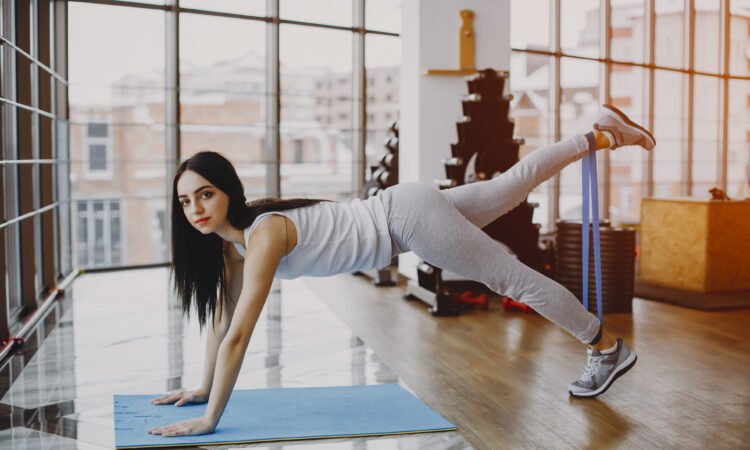
Use a thick mat that does not slip because comfort is key. Technically, props are optional but a small ball or band gives variations intended to be performed for Pelvic Floor Focus. Ensure there is quietness and mirrors for setup.
Reformer Pilates will need to be done at a studio since machines are generally too costly to purchase for home use. There is most likely an intro pack available so give it a go at a low cost. Always begin with gentle marches to warm up and wake up the core!
Sent on Purpose
Inhale through the nose to prepare, exhale through the mouth to deliver. This beat controls all motion. Maintain Precision: Quality over quantity. In Mobility Training, place smooth arcs before swift motion. Note Progress: Write how you feel after the session – less tension means growth. Drink water and Rest: Have water before and after; give time for muscle recovery days.
This will bring you safely and happily into Pilates. Remember, Pelvic Floor Focus is an awareness-come with simple cues strength does not happen all at once but over time.
Sample Routines to Try at Home or Studio
Shared below are very easy beginner routines for both Mat Pilates and Reformer Pilates. They take 20-30 minutes to perform, integrating the use of Pelvic Floor Focus plus Mobility Training. Do 2-3 times per week, with rest when needed.
Mat Pilates Routine
- Lie on your back, keep your knees up. Start by marching your legs and draw your pelvic floor in with each exhale. This initiates the Pelvic Floor Focus. <5 mins.
- Curl up head and shoulders, start pumping arms. Deep core must be found for endurance for the journey to come. <3×10 breaths
- Extend one leg out long and begin to circle it in slow motion. Hip Mobility Training is initiated here.<10 per leg
- Spine Twist. Sit up. Rotate your torso while hugging your knees. Rotational freedom.
- Bridge with Pelvic Lift, thrust upward squeezing glutes and pelvic floor at the top of the movement. Base strengthening
- Child’s pose with deep breaths, Cool-Down.
Reformer Pilates Routine
- Push Carriage Out, In. Try Toe, Heel, Arch positions (4×8 slides). Lower body mobility requires training different parts of the foot and leg.
- Short Spine Massage. With straps on feet, roll up and down the spine. Gently decompressed, it allows focus to retain on the pelvic floor.
- Leg Circles. With one foot in a strap circling outwards toward space within the hips.
- Mermaid Stretch, four each side. Lying on the carriage reaching overhead with one arm opens up the side body for more flow.
- Elephant, six. Put your hands on the footbar round the spine to slide the carriage. It challenges the core with the Pelvic Floor Focus engaged.
- Lie on carriage, breathe into the back for a cool-down that integrates all she has attained during this session.
This is what makes Reformer Pilates stand out, due to the feedback through the machine enabling accurate Mobility Training.
The Next-Level Nuance of Pilates Progression
After getting comfortable, throw in some variations. In Mat Pilates, throw in pulses to hold thus increasing intensity. For the reformer users, springs can be lightened for faster flows or jumps added for cardio.
A quick Kegels exercise, done in commutes, helps to build up the habit and should be performed daily. For Mobility Training, playing with props such as foam rollers will effectively assist in widening ranges safely. Join groups or use apps for lead times. See how Pilates helps other things, like walking with better balance. Waiting gives good results; many feel big changes in six months.
Pilates is not a mere movement of the body but rather harmonization between mind and body. Mat Pilates speaks of simplicity while Reformer Pilates talks about modernism. They open up a way, Mat path, to find deeper connections. In individual Pelvic Floor Focus and Mobility Training, you will build strength that stays.
For more exclusive Health & Fitness updates, visit Reminder Magazine
add a comment