



Micro-Mindfulness Practices for Stress Relief
7views
In today’s fast-paced life, stress is a common struggle for most people. Work pressure, family obligations, and notifications tugging at us from every direction; to find peace amidst it all seems impossible. But what if relief was just minutes away? Micro-mindfulness practices are small and short practices that reduce stress and do not require a long time or large amount of free hours to practice. Such brief habits bring the mind into the present moment and make one feel grounded and calm.
Micro-mindfulness refers to small acts, single breaths, or thoughts of gratitude done within normal situations. Studies have affirmed the fact that anxiety is reduced when better concentration is achieved which in turn leads to an increased sense of well-being. People are therefore embracing and adopting breathing exercises as part of the conscious tools available due to the ease of use brought about by the busy life facilitated by technology and other changes globally. Major micro-mindfulness practices to be discussed in this paper include Mindful Breathing Exercises 2025, gratitude practice for mental health benefits, tips for fast stress relief, and meditation apps for beginners that will make you resilient to everyday stressors when included in your daily routine.
Micro-mindfulness means sprinkling small purposeful moments across the day. Practices that take between thirty seconds and five minutes long do not sit across hours – in fact, they ready the mind to pause and notice the now allowing worries from then and later to slowly let go.
Wellness specialists report how micro-mindfulness is able to initiate the relaxation response in the body by slowing down the heart rate and relaxing muscle tension. In their words, if previously instituted on a regular basis, short breaks that take minutes to perform, can reduce stress hormones by 20 percent. This will be very useful in 2025 because remote work and social media increase the feeling of overwhelm.
Benefits go beyond relief. It develops emotional resilience, better decision-making capacity, and good sleep in the long run. Micro-mindfulness fits well with busy schedules – practice it during a coffee break or on your way to work. As you read further in this article, you will discover how Mindful Breathing Exercises 2025 together with other tools make it possible for everyone to access such practice.
Basic neuroscience. When you are stressed, your brain gets more energy from the emotional system by pumping in stress hormones. Micro-mindfulness flips that by turning on the opposite center and lets in some feel-good chemicals like serotonin. A recent review of over 50 studies has confirmed that short bouts reduce the risk of depression and improve mood.
For mental health, habits offer a buffer against burnout. They permit the practice of self-compassion, changing the narrative from “I can’t handle this” to “I can take one step now.” In a world of constant input, reclaiming your attention through micro-mindfulness is a subtle shift.
Breath In, Burnout Out: Mastering Mindful Breathing Exercises 2025
Breathing sits at the center of micro-mindfulness, always available, free to use, immediately calming. The Mindful Breathing Exercises 2025 focus on refreshed techniques for contemporary strains-including tech-free pauses amidst screen fatigue. These comprise slow purposeful breaths that will signal safety to your body.
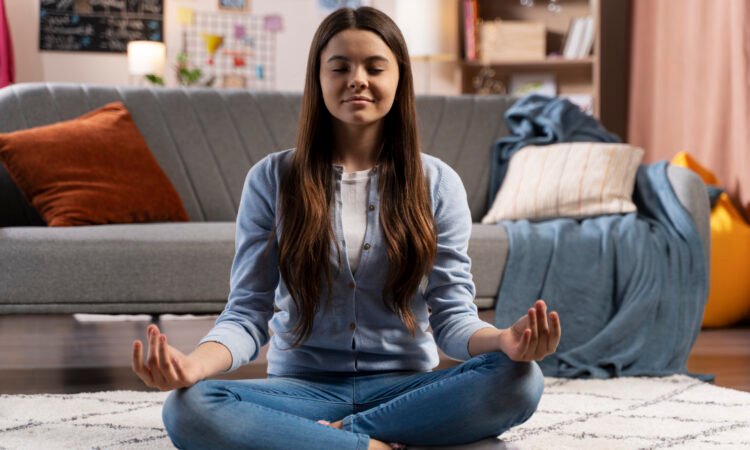
Start with the basics. Take an easy seat, close your eyes if you can and watch the normal breath for 10 seconds. Feel air coming, feel air going. That changes state. Now look at some advanced Mindful Breathing Exercises 2025 that will take you further inside toward relief.
It is a common technique further popularized in the latest wellness trends as the go-to among Mindful Breathing Exercises 2025. Inhale quietly through your nose to a count of four. Hold to a count of seven. Exhale through your mouth to a count of eight making a whoosh sound. Repeat four times.
How it helps: The rest-and-digest nervous system gets activated by longer exhales, hence an immediate drop in heart rate. Users have reported that it kills jitters before meetings and bedtime anxiety as well. Do it twice a day so that it becomes embedded as a habit- in the morning and evening- for long-term stress defense.
Box Breathing for Focus
Another top-performer in Mindful Breathing Exercises 2025 is box breathing. Inhale four, hold four, exhale four, hold four. It can be pictured as if one is tracing a square with each phase.
This steadies the supply of oxygen, getting rid of mental fog. It is best to use it in sixty seconds of breaks between calls you are making. Over a couple of weeks, it builds up what is known as pressure tolerance which makes speaking on a very hectic day seem rather easy.
Breathe into your stomach, not into your chest. Put one hand on your belly; let it go up when you take air in and down when you breathe out. Attempt five breaths.
This breathing exercise anchors you to the present physical moment so that shallow panic breathing does not overtake you. You can do it while driving or do it with someone you are arguing with. Insert Mindful Breathing Exercises 2025 into transitions, after emails before eating. Do it enough times that it becomes an automatic response, killing stress right at the root.
Gratitude Puts the Mind on Abundances Rather Than Inadequacies
Gratitude puts the mind on abundances rather than inadequacies. This is the core micro-mindfulness tool. Mental health practitioners recommend Gratitude Practices Mental Health for breaking the loop of negative thoughts. Just a simple thank you can start happiness, beating the gloom of stress.
Scientific findings prove that regular gratitude reduces anxiety by about 25 percent and improves sleep. It raises feelings in brain reward areas just like exercise does. In 2025, with high mental health awareness, Gratitude Practices Mental Health are part of the mental health routines that must be considered in the proactive care of the condition.
Journaling Three Good Things
End the day with three positive things; a kind word, a warm meal, or a quiet walk. Write the reason it made you feel good. This Gratitude Practices Mental Health staple builds optimism. In the results of studies, it reduced depressive symptoms by 35 percent over the course of one month. It’s quick – less than two minutes, yet profound.
Writing Thank You Notes
Think about a person that ever helped you; text them brief thanks. If you are shy, do it mentally.
Gratitude Practices Mental Health like this improves relationships, decreasing the feelings of loneliness. It brings out the bonding hormone, which is known as the “cuddle hormone,” reducing the pain of loneliness.
Mindful Appreciation Scans
Stop: Name one thing you see, hear, or feel that you’re thankful for right now.
Among Gratitude Practices Mental Health tools, this grounds you in the present time. It fights overthinking, encouraging resilience.
Go for daily Gratitude Practices Mental Health shots – morning lists or evening reflections. They build up like interest on a bank account turning stress into an opportunity for growth. Practicing made people feel 10 percent happier on a weekly basis.
Essential Short Stress Relief Techniques
When the strain gets high, it is Quick Stress Relief Techniques that work. These are micro-tools of no preparation time; in fact, they can fit into moments of frenzy. From senses to movement, balance is restored.
Sensory grounding pulls you out of any thought loop that might be bothering you within a minute. Take a look at five things around you, four things you can feel, three you can hear, two you can smell, and one you can taste. Progressive Muscle Tension-Relax puts on some pressure by curling your toes, hold it for five seconds and then let go. Work up the body letting go of physical tension so the mind can relax.
Purposeful Walk. Do a five-minute walk thinking about steps or wind. Nature raises feel-good chemicals which reduce stress hormones. Hug someone you love. A hug of just twenty seconds lowers stress hormones by touch. If alone, cross arms and give a self-hug. Let out a good laugh. Watch something funny or remember a joke. Laughter brings in more oxygen therefore lightening the mood right away.
Smell therapy. Inhale lavender or lemon, from lotion smells. Aromas calm the nerves fast.
These simple quick stress hacks from expert tips can be done at work, in the car, or at home. Combine with Mindful Breathing Exercises 2025 for extra power. Notice what feels right; make it personal.
| Technique | Time Needed | Best For | Quick Tip |
| Sensory Grounding | 60 seconds | Anxiety surge | Use in public to refocus |
| Muscle Release | 120 seconds | Tension growing | Begin at feet, end at face |
| Intentional Walk | 5 minutes | Noon crash | No phone allowed |
| Embrace or Self-Hug | 20 seconds | Sadness wave | Breathe deep while doing |
| Laughter Boost | 60 seconds | Overload | Keep funny video collection close |
| Smell Breathe | 60 seconds | Sudden pressure | Carry essential oil roller |
The table gives a quick glance of stress relief techniques to help pick which is best.
Top Meditation Apps Most Used By Beginners
Tech permits micro-mindfulness. Newbies: Top Meditation Apps Beginners offer guided sessions, timers, and progress tracking. Come 2025, apps get better since AI makes them super personal plus free content keeps growing.
Insight Timer pops up with over 200,000 tracks for free (not a joke), great to poke around. Its beginner path softly teaches basics. Calm includes sleep stories and a daily 10-minute guide (several calm voices helping to start). Headspace presents with animations – learning can be fun; from stress to focus.
For meditation apps, try out newbies on free trials. They take the mystery out of practice and build confidence.
| App Name | Free Content | Beginner Features | Standout Perk |
| Insight Timer | Large catalog (90% free) | 7-day intro course | Community live events |
| Calm | Daily meditations | Breathing tutorials | Celebrity-narrated stories |
| Headspace | Basics pack | Animated guides | Stress-specific packs |
| Declutter The Mind | Guided audios | Simple timers | Journal integration |
These Meditation Apps Beginners can download from stores set routines easily. Set five minutes a day; see calmness grow.
Inserting Micro-Mindfulness Habits
Record in a notebook what worked and how the moods were after. Change as needed. Also, share with friends for accountability. Soon, they become normal, changing how stress is met.
Conclusion
Micro-mindfulness stress relief techniques allow you to practice thriving amidst the storm. From Quick Stress Relief Techniques, from a mindfulness gratitude practice, mental health routines, Quick Stress Relief Techniques and a meditation app for beginners-these tools speak ease. They murmur this: Peace is not at a distance; it lies within pauses that we create.
add a comment